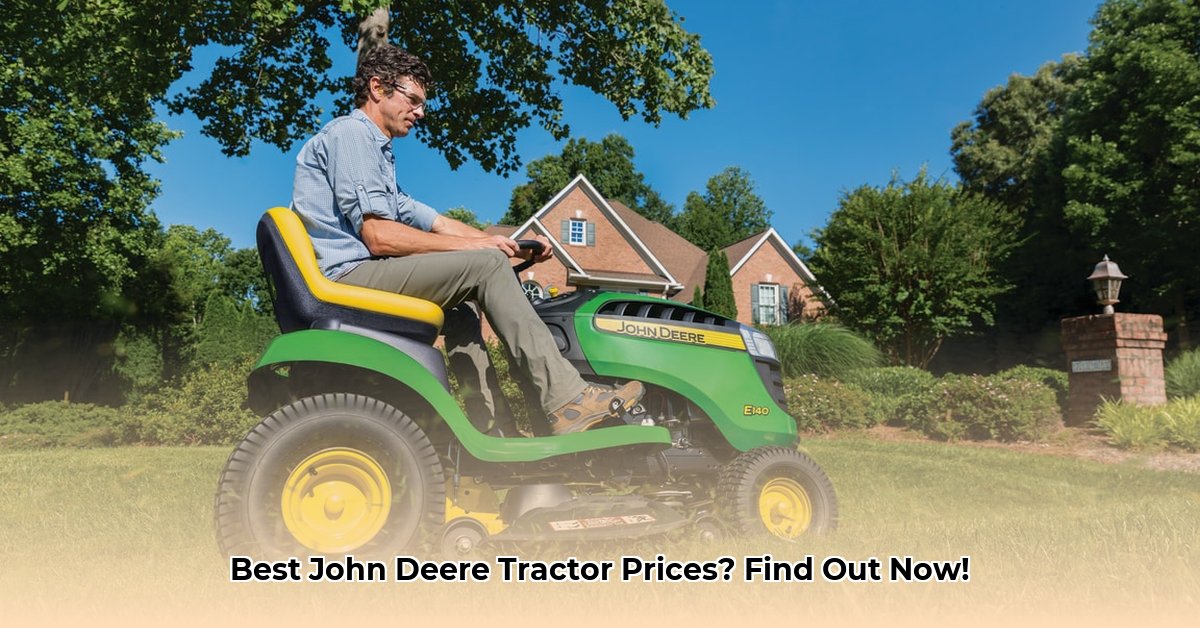
Finding the right John Deere tractor for your lawn care needs can feel overwhelming. This guide provides a comprehensive overview to help you navigate the process, comparing models, features, and prices to ensure you make a smart, budget-friendly decision. Whether you're a homeowner with a small yard or a landscaping professional managing acres, we'll equip you with the actionable intelligence needed to choose the perfect tractor. For those interested in plowing, check out this helpful resource on John Deere plows.
Understanding Your Needs: Assessing Your Lawn and Budget
Before diving into John Deere's extensive lineup, consider your specific requirements. The size and complexity of your lawn directly impact the type of tractor you’ll need. Think of it like choosing a vehicle – a compact car suits city driving, while an SUV is better for hauling.
Lawn Size: A small backyard thrives with a compact model, while expansive properties require a more robust machine. Larger lawns necessitate more powerful engines and larger cutting decks, influencing both performance and, consequently, price. What is the overall acreage you need to cover?
Desired Features: Mulching capabilities (which recycle grass clippings as fertilizer) and bagging (for neat collection) add cost and convenience. Consider the trade-offs between these features and your budget. Do these features align with your landscaping goals and priorities?
Budget: Establish a realistic budget upfront. John Deere offers a wide price range, ensuring options for various budgets. However, remember that the initial purchase price is only one component of the total cost of ownership (TCO). What is your maximum allowable expenditure for both the purchase and long-term maintenance?
Exploring the John Deere Lineup: Models and Key Features
John Deere offers a diverse range of lawn tractors. Each model caters to specific needs and budgets:
Compact Models (e.g., Q810E): Ideal for smaller yards, these are highly maneuverable and fuel-efficient, representing a cost-effective solution for smaller properties. How does the maneuverability of a compact model compare to larger, more powerful options for your specific landscaping needs?
Mid-Size Workhorses (e.g., QuikTrak™ 800 Series): These models balance power and maneuverability, suitable for medium-sized lawns. They offer a good blend of performance and affordability, proving versatile for various landscaping tasks. How does the versatility of a mid-size tractor compare to the specialized capabilities of compact or larger models?
Heavy-Duty Tractors (e.g., ZTrak™ 900 Series): Built for large properties, these powerful machines prioritize speed, efficiency, and durability, though at a higher initial investment. How does the speed and efficiency of higher-end models translate into cost savings in the long run, considering labor costs and time saved?
Essential Features to Consider:
Cutting Deck: The 7Iron™ PRO deck is renowned for its durability and efficient cutting performance. A robust cutting deck minimizes maintenance needs and extends the lifespan of your tractor. How does a robust deck improve overall efficiency and lower long-term maintenance costs?
Tires: Michelin X Tweel Turf airless radial tires significantly reduce the risk of flat tires, minimizing downtime and repair costs. The reduced maintenance provided by airless tires translates into long-term cost savings and peace of mind. How significant are the cost savings and time benefits of puncture-proof tires over the life of the tractor?
Engine: Opt for a fuel-efficient engine that meets your lawn's size and usage frequency. Fuel-efficient models contribute to significant cost savings over the tractor's lifetime. How significant are potential fuel cost savings with more fuel-efficient engine options?
John Deere's NEVERSTOP Support: This program ensures minimal downtime, reducing maintenance disruptions and extending the tractor's service life. How does the NEVERSTOP support program reduce downtime and contribute to overall cost savings?
Price Comparison and Total Cost of Ownership (TCO)
The price range for John Deere lawn tractors is extensive, varying by model and features. However, focusing solely on the initial purchase price is shortsighted. Calculating the TCO is critical for making an informed decision. This involves considering all expenses over the tractor's lifespan.
| Model | Cutting Deck Size | Key Features | Approximate Price Range (USD) |
|---|---|---|---|
| Q810E | Compact | Maneuverable, fuel-efficient | $2,000 - $3,000 |
| ZTrak™ 900 Series | Large | High speed, efficient, heavy-duty | $4,000 - $7,000 |
| QuikTrak™ 800 Series | Mid-size | Durable, innovative design, versatile | $3,500 - $6,000 |
| Walk-Behind Mowers | Varies | Ergonomic, efficient for smaller yards | $500 - $1,500 |
Note: These are estimates. Consult your local John Deere dealer for accurate pricing information.
Calculating Your TCO: A Step-by-Step Guide
- Gather Data: Collect information on the purchase price, expected lifespan, fuel efficiency, maintenance schedules, and potential repair costs.
- Estimate Annual Costs: Project annual fuel consumption, maintenance expenses (oil changes, blade sharpening, etc.), and potential repair costs.
- Calculate Depreciation: Estimate the resale value at the end of the tractor's useful life and subtract it from the purchase price to determine depreciation.
- Total Cost Calculation: Sum all costs (purchase price, financing costs, fuel, maintenance, repairs, depreciation, storage, and operator costs if applicable) to derive the TCO.
- Annualize TCO: Divide the total TCO by the number of years of use to determine the annual cost.
Making the Right Choice: A Partnership for Long-Term Success
Choosing a John Deere lawn tractor is a significant investment. Don't rush the process. Carefully weigh your needs, budget, and the TCO of various models. Consult your local John Deere dealer for expert guidance, demonstrations, and personalized recommendations. The right tractor is a partnership built for years of reliable and efficient lawn care – minimizing your long-term costs while maximizing your returns. Remember, prioritizing fuel efficiency and regular maintenance significantly reduces your TCO. This makes your tractor a long-term asset rather than a fleeting expense.